AI Is Not the Threat. Our Refusal to Change Is.

History may remember AI not as a threat to education, but as the mirror that revealed how desperately education needed to change.

By David E. Kirkland
In 1984, the educational psychologist Benjamin Bloom published what became known as the “2 Sigma Problem,” showing that students who received one-to-one tutoring dramatically outperformed their peers in conventional classrooms. Bloom’s finding was not especially surprising. Most parents intuitively understand that individualized attention helps children learn. The challenge was not proving that personalized instruction worked. The challenge was scaling it. No society could afford a private tutor for every child (Bloom, 1984).
Then, almost overnight, artificial intelligence made possible what had previously existed only in theory—a responsive, adaptive, endlessly patient tutor available to nearly every student with an internet connection.
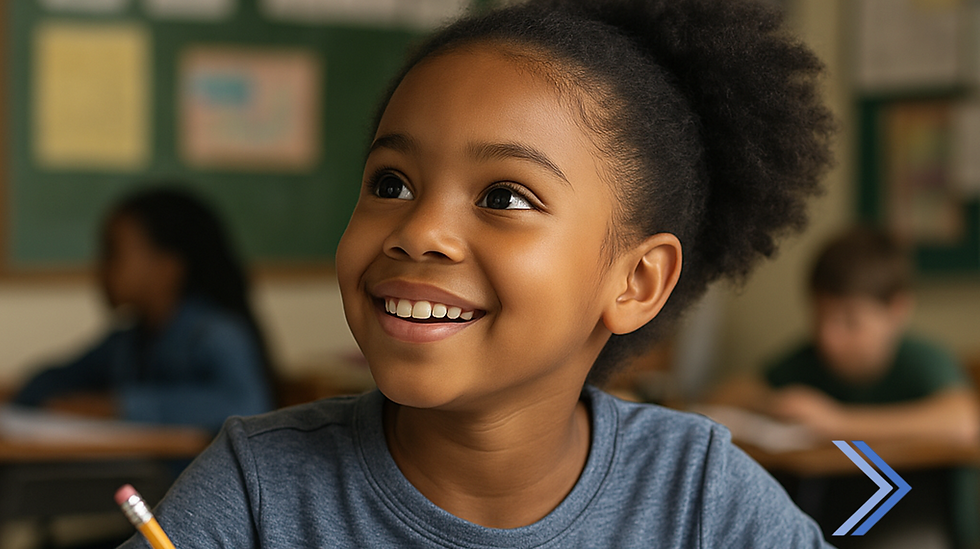
Not long ago, while researching AI and learning, I met a student named Amaiya. She was failing math. She attended class, completed assignments, and sought help from her teacher, yet the subject remained frustratingly out of reach. Then she began using AI as a learning companion. Unlike the classroom, the technology was available whenever she needed it. It could explain the same concept in ten different ways without growing impatient. It could slow down, repeat itself, and adapt its explanations to her understanding. “ChatGPT is my favorite teacher,” she told me. Within a semester, she had moved from failing math to loving it.
At the same school, another student described using AI for something entirely different. He was socially isolated and often targeted by peers. Through conversations with AI and participation in online communities, he gained the confidence and interpersonal skills to connect with a new group of friends who shared his interests. “Don’t feel sorry for me,” he said. “I’m the happiest I’ve ever been.”
Then there was a teacher. She described AI as the tool that helped her “get her life back.” Lesson planning, which once consumed entire evenings, could now be completed in a fraction of the time. Administrative tasks became manageable. Feedback reached students more quickly. Most importantly, she was spending more time with her children and less time buried beneath paperwork.
These stories are not really about technology. They are about access. They are about possibility. And they raise a question that many of the loudest voices in the public debate have been reluctant to ask: What if artificial intelligence is not exposing the failure of students? What if it is exposing the limitations of the systems we built around them?
Much of the public conversation about AI in education has been dominated by anxiety. Students will cheat. Teachers will become obsolete. Human relationships will disappear. Critical thinking will collapse. Newspapers, podcasts, social media commentators, and even some scholars have often framed AI as an existential threat to learning itself. These concerns merit attention. Generative AI systems can produce inaccurate information. They can reflect biases embedded in training data. They raise legitimate questions about privacy, surveillance, intellectual property, and equity. Organizations such as UNESCO have rightly emphasized the need for ethical safeguards and human oversight in educational applications of AI (UNESCO, 2023).
Yet something curious has happened in these debates. The conversation often begins with the assumption that the greatest danger to education is technological disruption. Rarely does it begin by examining the failures already present in the system. This is a remarkable oversight.
Every year, millions of students pass through schools that struggle to meet their needs. Achievement gaps persist. Opportunity gaps persist. Teacher burnout remains widespread. Chronic absenteeism continues to rise. Student engagement remains alarmingly low in many communities. The 2024 Gallup Student Poll found that only about half of students report feeling engaged in school on a daily basis (Gallup, 2024). Meanwhile, the National Center for Education Statistics continues to document persistent disparities in academic outcomes linked to race, class, language status, zip code, and dis/ability (NCES, 2024). Yet few people describe these realities as existential threats.
We worry that AI might undermine learning while accepting systems that already fail to deliver it equitably. This contradiction reveals something important. Much of the resistance to AI is not fundamentally about technology but about change.
History offers countless examples of this pattern. The printing press was once seen as dangerous because it democratized access to knowledge. Calculators were criticized for threatening mathematical thinking. The internet was accused of destroying attention spans and rendering libraries obsolete. In each case, the technology exposed weaknesses in existing institutions while simultaneously creating opportunities for new forms of learning.
Artificial intelligence belongs within this historical tradition. The question is not whether it will change education. The question is whether educational institutions possess the courage to change themselves.
At its core, the debate over AI is actually a debate about the purpose of schooling. For more than a century, most educational systems have been organized around an industrial model of learning. Knowledge is divided into subjects. Students move through standardized sequences. Teachers deliver information. Assessments measure recall and reproduction. The model made sense in an era when information was scarce and access to expertise was limited. But we no longer live in that world.
Today, information is abundant. Expertise is increasingly accessible. Knowledge is networked, dynamic, and distributed. Under these conditions, many traditional educational practices begin to look less like timeless necessities and more like historical artifacts.
The rise of AI forces us to confront uncomfortable questions. If a student can instantly access information, should education continue to emphasize memorization as heavily as it does? If AI can provide personalized explanations, what becomes the teacher’s highest value? If routine cognitive tasks can increasingly be automated, which human capacities become most important?
These questions are not technological. They are philosophical.
The educational theorist Gert Biesta (2000) suggests that education serves three broad purposes: qualification, socialization, and subjectification—the development of knowledgeable, socially responsible, and fully formed human beings. Artificial intelligence challenges each of these purposes simultaneously. It forces us to reconsider what knowledge matters, how communities form, and what it means to become human in an age of intelligent machines. This is why simplistic calls to ban AI are ultimately inadequate. One cannot ban the future. More importantly, one should not try.
Recent research suggests that students are already integrating AI into their educational lives, regardless of institutional policies. A 2025 survey conducted by the Walton Family Foundation found that a substantial majority of students believe AI should play a role in education and regularly use it for learning-related tasks (Walton Family Foundation, 2025). Likewise, teachers increasingly report using AI to support planning, feedback, differentiation, and administrative work. Research conducted by Gallup and the Walton Family Foundation found that teachers using AI save nearly six hours per week on average—time that can be redirected toward instruction, relationships, and professional growth (Gallup & Walton Family Foundation, 2024).
The implications are profound. If AI can reduce administrative burdens while expanding access to personalized support, then its significance extends far beyond efficiency. It becomes an equity issue.
Historically, transformative technologies are adopted first by those with the greatest resources. Wealthier students gain access sooner, learn to use them more effectively, and accumulate advantages that compound over time. If public education responds to AI primarily through restriction rather than thoughtful integration, the likely outcome is not equity but a widening of existing disparities.
Students in affluent communities will continue learning how to collaborate with emerging technologies. Students in under-resourced communities will be told to avoid them. That is not protection. That is exclusion.
Meanwhile, the global context continues to shift. Nations around the world are investing heavily in artificial intelligence, advanced computing, and digital literacy. Educational systems are increasingly recognizing that AI literacy will become as essential to democratic participation and economic opportunity as traditional literacy itself. The Organisation for Economic Co-operation and Development has repeatedly emphasized the importance of preparing learners not merely to consume technology but to understand, critique, and shape it (OECD, 2024).
The stakes, therefore, are far greater than academic performance. They concern citizenship. They concern democracy. They concern national security. They concern the future of human agency.
This is where the conversation must deepen. The ultimate purpose of AI in education is not to help students complete assignments faster. It is not to reduce grading time. It is not to increase efficiency for its own sake. Efficiency is a means, not an end. The broader promise is that AI may finally allow us to redesign educational systems around human flourishing rather than institutional convenience.
For generations, educators have known that relationships matter, personalized learning matters, timely feedback matters, creativity matters, and curiosity matters. The tragedy is not that we lacked the evidence. The tragedy is that we lacked the capacity to provide these experiences consistently at scale. Artificial intelligence does not automatically solve this problem, but it creates possibilities that previous generations could scarcely imagine.
The greatest irony of the AI debate is that many of the people most frightened by artificial intelligence rarely express the same alarm about schools that fail millions of children each year. We fear a future we cannot predict while defending a present we can plainly see. We worry that AI might transform education while ignoring the reality that education desperately needs transformation.
History may ultimately remember artificial intelligence not as the technology that changed schools, but as the mirror that revealed how much schools needed to change.
Perhaps the wrong question has guided the entire debate. The question was never whether AI would make students less intelligent. The question is whether we have been asking too little of human intelligence all along. For generations, schools have rewarded the storage of information, even as information has become increasingly abundant. They have prized compliance over creativity, certainty over curiosity, and efficiency over imagination. Artificial intelligence exposes the fragility of that model. It challenges us to build schools organized not around what machines can do but around what only human beings can become.
The future of education will not be decided by algorithms. It will be decided by whether we have the courage to rethink inherited assumptions about learning, knowledge, and human potential. History may remember AI as a technological breakthrough, but its deeper significance may be philosophical—not whether artificial intelligence will change the future—it already has—but whether we will use this moment to build schools that merely prepare children to survive that future or schools that empower them to shape it.
References
Biesta, G. (2020). Risking ourselves in education: Qualification, socialization, and subjectification revisited. Educational Theory, 70(1), 89–104.
Bloom, B. S. (1984). The 2 sigma problem: The search for methods of group instruction as effective as one-to-one tutoring. Educational Researcher, 13(6), 4–16.
Gallup. (2024). Student poll results. https://www.gallup.com
Gallup & Walton Family Foundation. (2024). Teaching with AI: New insights from educators. https://www.gallup.com
National Center for Education Statistics. (2024). The condition of education 2024. https://nces.ed.gov
OECD. (2024). Education policy outlook 2024: Artificial intelligence and the future of learning. https://www.oecd.org
UNESCO. (2023). Guidance for generative AI in education and research. https://unesdoc.unesco.org
Walton Family Foundation. (2025). Students, teachers, and parents on AI in education. https://www.waltonfamilyfoundation.org
_________________________________________
Suggested citation
Kirkland, D.E. (2026). AI Is Not the Threat. In forwardED Perspectives, https://www.forward-ed.com/post/ai-is-not-the-threat-our-refusal-to-change-is.
About the Author
David E. Kirkland, PhD, is the founder and CEO of forwardED, a national organization reimagining education through equity, healing, and human possibility. He can be reached at david@forward-ed.com.


As an AI hater, because of the environmental impact, I was ready to argue with you, but... You present an important argument. Education in its current state is not equitable or liberatory and that is the tragedy we have known for generations. It was not designed to be either as it was designed around white supremacy culture. So - I agree there is an opportunity to change with the introduction of a new technology. That is a beautiful thing AND I have found that even the most positive things (such as mindfulness) when put into a racist system become a tool for racism and exclusion. As you say, the "rich get richer". How do we engage the whole ed community…